

Contents
Red flowers in a garden is a classic and timeless look that never grows old. Fortunately, there’s a wide selection of red perennials that gardeners can select to add boldness and vivaciousness to your flowerbeds or landscapes.
There are so many different options to choose from, the hard question becomes – where do you start?
We’ve decided to make things a bit easier for you by picking out our favorite red perennials that are suitable for different levels of gardeners across a wide array of different hardiness zones. Let’s dig in and take a look at our favorites!
Amaryllis


|
botanical name Amaryllis |
|---|---|

|
sun requirements Partial Shade |

|
height 4-10 inches |

|
hardiness zones 8 to 10 |
The Amaryllis has beautiful bell-shaped flowers that bloom in deep red. This perennial can grow for many years, with flowers reappearing late fall and winter. They’re great for both indoor and outdoor growth. Because they bloom in the winter, they often make great holiday gifts that brighten up any gloomy winter day.
These plants thrive in USDA Plant Hardiness zones 6 to 8 and prefer direct sunlight. They don’t need a lot of water until their stems appear. Once you see the stem, you can gradually increase watering.
After the flower fades, make sure to cut off the flower from the stem. When the stem yellows, you can cut down to the top of the bulb. Cutting them will help them restore their energy.
Once the leaves also fade in autumn, cut them back and remove the bulb from the soil. Store the bulbs in a cool, dark area, such as a refrigerator. They’ll be ready for planting after six weeks of storage.
Anthurium
|
|
botanical name Anthurium |
|---|---|
|
|
sun requirements Indirect Sunlight |
|
|
height 2-3 feet |
|
|
hardiness zones 10 |
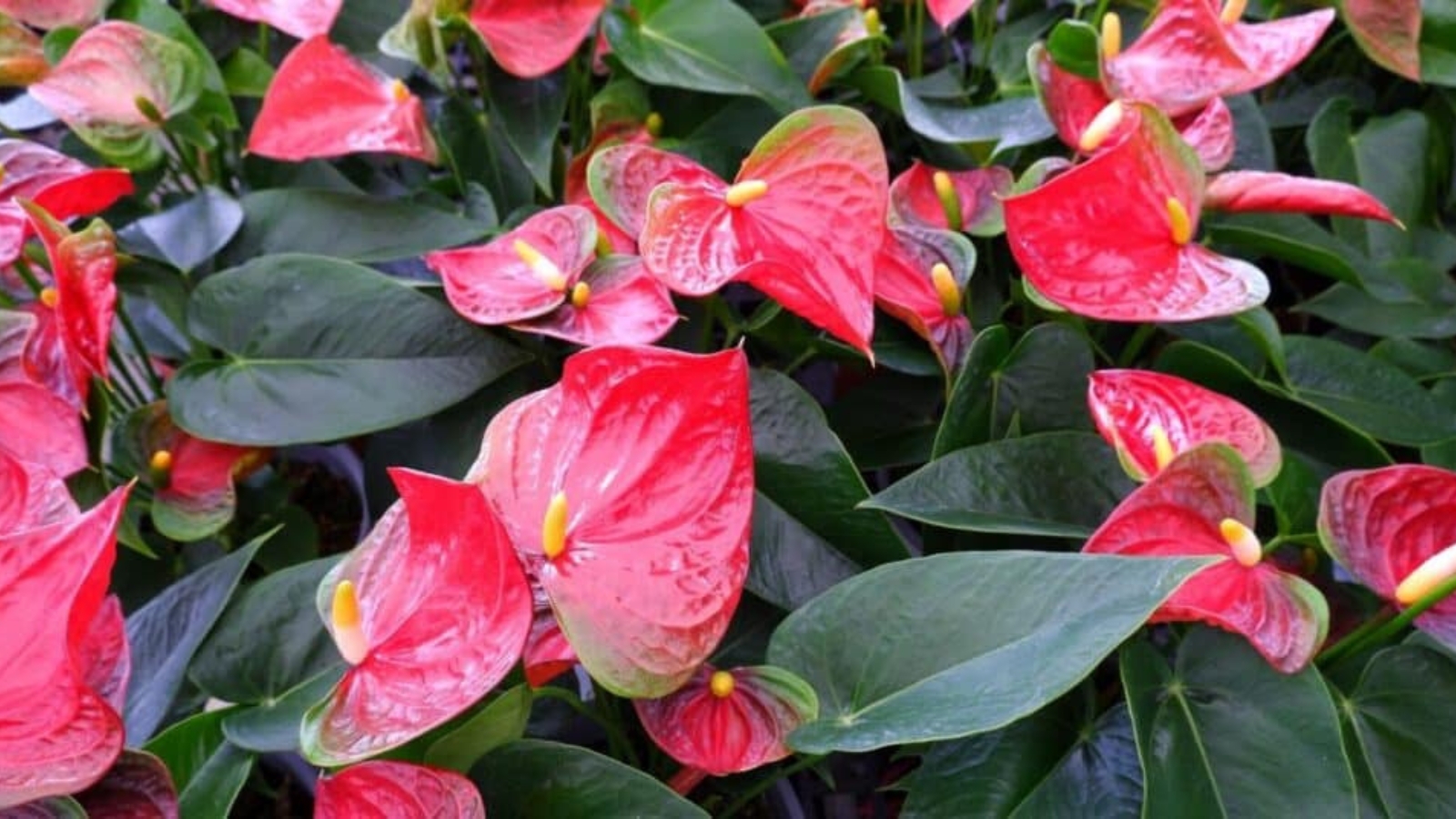
Growing Anthuriums outdoors can be a fun challenge for intermediate gardeners. They prefer warmer climates and grow best in zones 11 and 12. They require a coarse potting mix that stays relatively moist. These plants need a good balance of bright and indirect sunlight to encourage their flowers to bloom.
In the wild, Anthuriums often anchor themselves onto other plants. So, if you notice that an Anthurium starts to bend and fall over, it’ll benefit from having additional support from a stake.
Make sure to remove browning leaves and faded flowers to help this plant to bloom again. However, if you want to collect seeds, leave the flower on the stem, and seeds will eventually appear.
Azalea

|
|
botanical name Rhododendron |
|---|---|
|
|
sun requirements Full sun or Partial Shade |
|
|
height 5 feet tall and 5 feet wide |
|
|
hardiness zones 3 to 9 |
Azaleas grow in various colors, including a vibrant red. They’re very hardy and can grow in zones 3 to 9. The flowers tend to bloom in early and late spring, so they bring in a refreshing pop of color that signifies that spring has arrived.
Once an Azalea shrub properly establishes itself, it’ll last many years. This perennial prefers acidic soil with good drainage. It doesn’t need a lot of extra watering unless it experiences a particularly dry spring.
It prefers soaking in a few hours of morning light and then spending the rest of the day in shaded areas. Too much heat and sunlight will cause the flowers to wilt very quickly.
Begonia

|
|
botanical name Begonia |
|---|---|
|
|
sun requirements Morning Sun/Afternoon Shade |
|
|
height 8 inches-2 feet |
|
|
hardiness zones 6 to 9 |
Begonias are wonderful red perennials to add to your garden because of their relatively easy care needs. This plant is happy in hanging baskets and garden beds and easily blooms in the summer. It’s essential to stay on top of deadheading and pinching so that it can grow bushy and full.
Begonias are hardy in zones 6 to 9. For any zones lower than 6, they won’t be able to survive the cold winter months. The tubers will not survive frost, so gardeners should plant them as soon as the threat of frost disappears. This perennial plant enjoys full sunlight and thrive in well-draining soil.
Bleeding Hearts

|
|
botanical name Dicentra spectabilis |
|---|---|
|
|
sun requirements Full to partial shade |
|
|
height 1-3 feet |
|
|
hardiness zones 3 to 9 |
Bleeding Hearts add a unique touch to any garden. This perennial has a string of delicate red flowers hanging along a stem. It grows best outdoors in zones 3 to 9 and blooms in early spring.
Growing Bleeding Hearts can be a bit of a challenge at first because they can be a little finicky. They prefer cooler areas with partial shade and moist soil that will need regular watering in the warmer months.
The chances of them flowering in season also increase if you use organic mulch. Mulch will help to keep the soil moist and also evenly distribute nutrients throughout the soil.
Once you get the hang of caring for them, they’ll provide many beautiful blooms throughout their lifetime.
Camellia
|
|
botanical name Camellia |
|---|---|
|
|
sun requirements Full Sun to Partial Shade |
|
|
height 6-14 feet |
|
|
hardiness zones 7 to 9 |
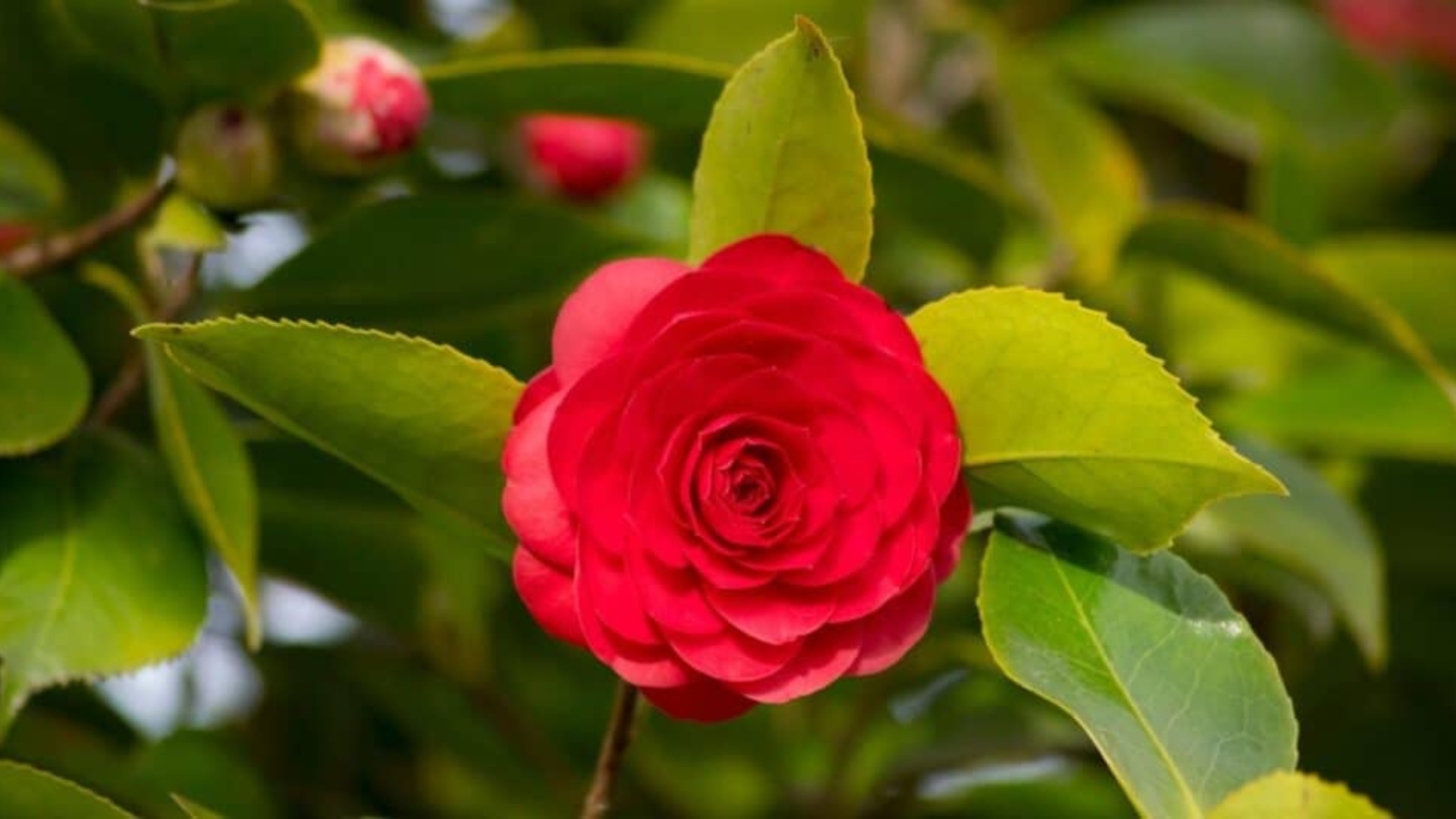
The Camellia’s flower holds numerous delicate petals that get packed together to create robust puffs of color in a garden. These elegant and charming flowers can grow from fall to spring and even survive some winters.
This shrub is rather hardy, but it does best in zones 7 to 10 where winters are milder. They need well-draining but moist soil and thrive in partial shade. If you have a spot in your garden that can meet these conditions, Camellias will grow easily and won’t require too much maintenance.
Canna Lily

|
|
botanical name Canna indica |
|---|---|
|
|
sun requirements Full Sun |
|
|
height 1-8 feet |
|
|
hardiness zones 7 to 10 |
Cannas grow vibrant red flowers and thrive in bog-like environments. So, they’re a cheery presence in the midst of damp and misty conditions. They also have beautiful foliage, so they’re a stunning addition to any garden.
Gardeners can plant Canna rhizomes in spring after the danger of frost. They’ll also enjoy a good amount of fertilizer in the growing season, so don’t be shy with adding nutrients to their soil.
Cannas are hardy in zones 8 to 11 and can simply stay in the ground in these warmer regions. However, if you live in a colder region, make sure to dig up the rhizomes and store them away during the winter so that you can plant them again in the spring.
Cardinal Flower

|
|
botanical name Lobelia cardinalis |
|---|---|
|
|
sun requirements Full sun, Partial sun |
|
|
height 2-4 feet |
|
|
hardiness zones 3 to 9 |
You can usually find Cardinal Flowers in moist and swampy conditions, so they’re great for gardens that naturally have damp soil. The plant has beautiful deep green foliage and a cluster of bright red flowers that make a strong statement.
Although this plant doesn’t live longer than a couple of years, they’re very good at reseeding, so you’ll consistently have a group of plants in your garden. They grow well in zones 3 to 9, and moist soil is a must for these plants. They enjoy full and partial sunlight, and will flower from summer to fall if kept in the right conditions.
Cockscomb

|
|
botanical name Celosia argentea var. Cristata |
|---|---|
|
|
sun requirements Full Sun |
|
|
height 9-32 inches |
|
|
hardiness zones 9 to 10 |
The Cockscomb got its name due to its similar appearance to a rooster’s comb. It blooms red flowers, but can also grow in pink, orange, yellow, and white. The flowers have ruffles that add a fun and whimsical appearance to a garden.
This plant is relatively low-maintenance and does well being left alone. Just make sure to deadhead the wilted flowers so that it can continue to bloom throughout the growing season.
Cockscomb grows well in zones 9 to 11 and needs moist and well-draining soil. They can grow in full and partial sunlight, but they prefer getting about eight hours of sunlight every day.
Columbine
|
|
botanical name Aquilegia |
|---|---|
|
|
sun requirements Full Sun to Part Sun |
|
|
height 1-3 feet |
|
|
hardiness zones 3 to 8 |
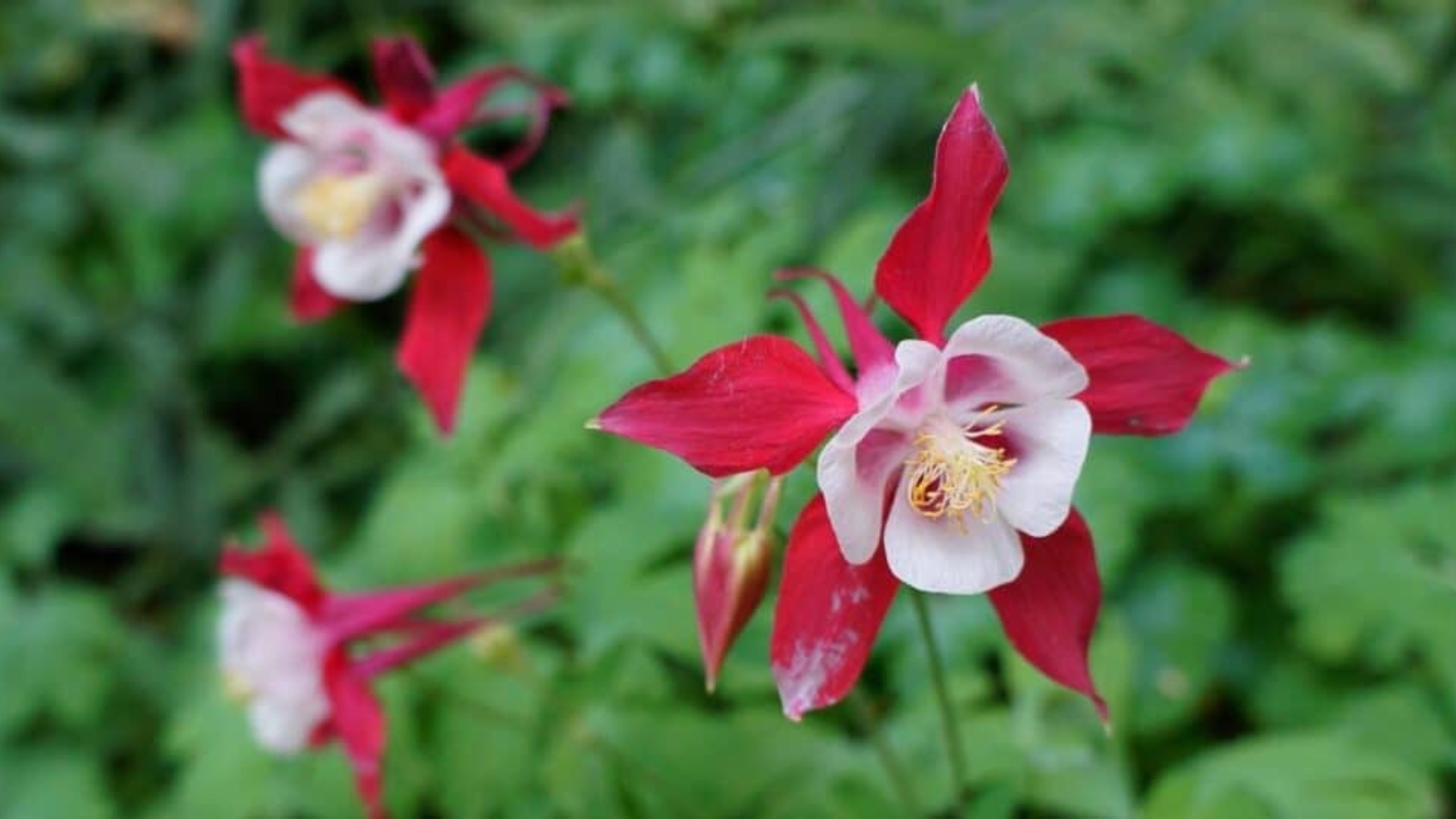
Columbines have uniquely shaped flowers that resemble a jester’s cap. They’re a hummingbird favorite, so they can bring a lot of life and animation to a garden. These plants can bloom for about four weeks.
When the flowers fade, it’s best to leave them alone so that they can self-sow. These plants don’t live for many years, so having the seeds fall around them can help you to consistently have them in your landscaping.
Columbines are hardy in zones 3 to 8. They can grow in sandy and loamy soil, but the most important thing is to find well-draining soil that can also stay moist.
Coneflower
|
|
botanical name Echinacea purpurea |
|---|---|
|
|
sun requirements Full to partial sun |
|
|
height 2-5 feet |
|
|
hardiness zones 3 to 8 |
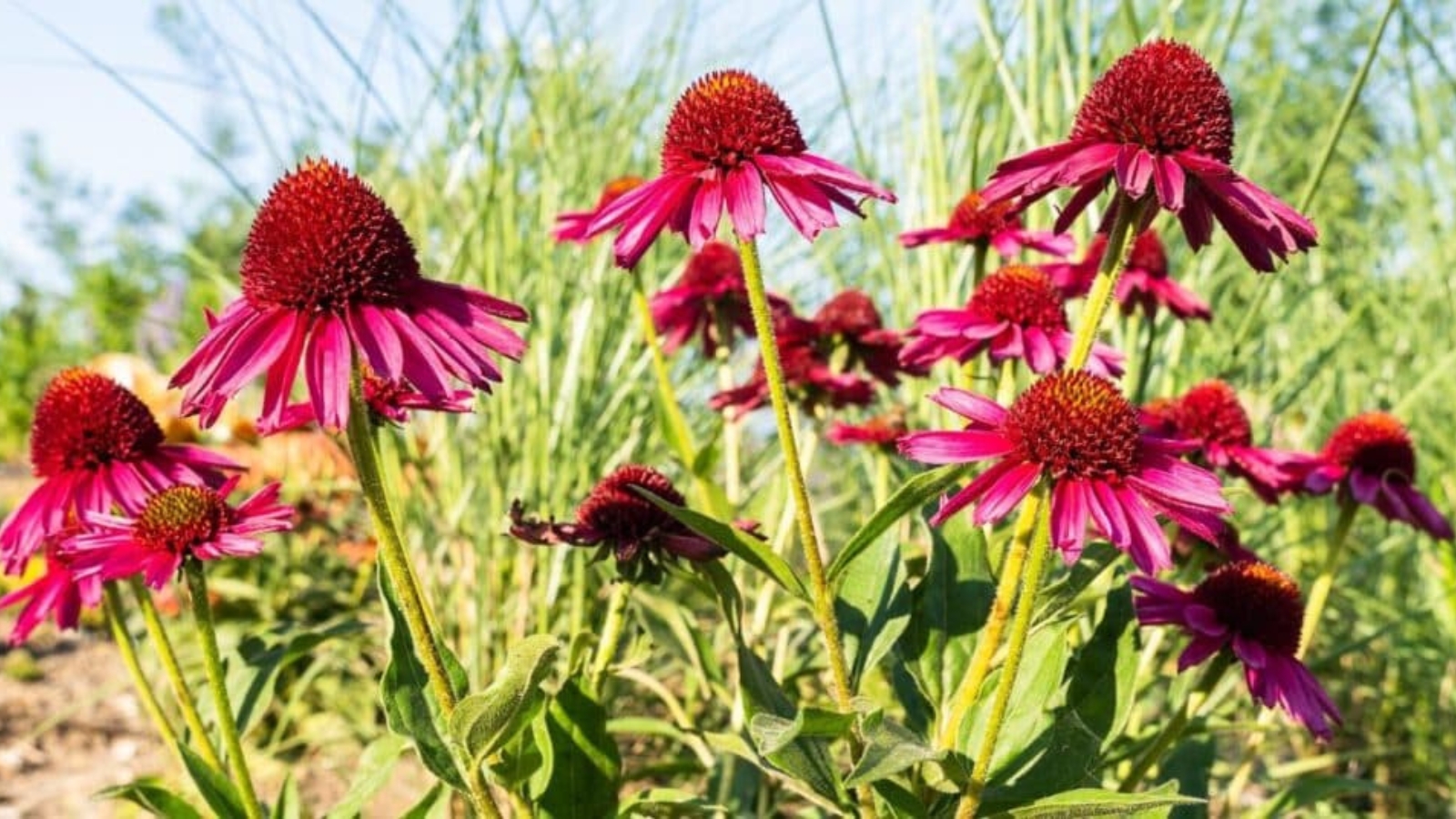
Coneflowers grow fiery red flowers that bloom in late spring to late summer. Their vibrant color is excellent at attracting bees, butterflies, and hummingbirds, so your landscape will be busy with activity during growing season.
These red perennials are hardy in zones 4 to 9, and they don’t require much care and aren’t too picky with where they’re planted. They’re healthy plants that aren’t susceptible to many diseases or pests. They’re also drought-resistant and can also grow in poor soil. Their natural hardiness makes them great perennials for beginner gardeners.
Freesia
|
|
botanical name Freesia |
|---|---|
|
|
sun requirements Full sun to partial sun |
|
|
height 12-24 inches |
|
|
hardiness zones 9 to 10 |
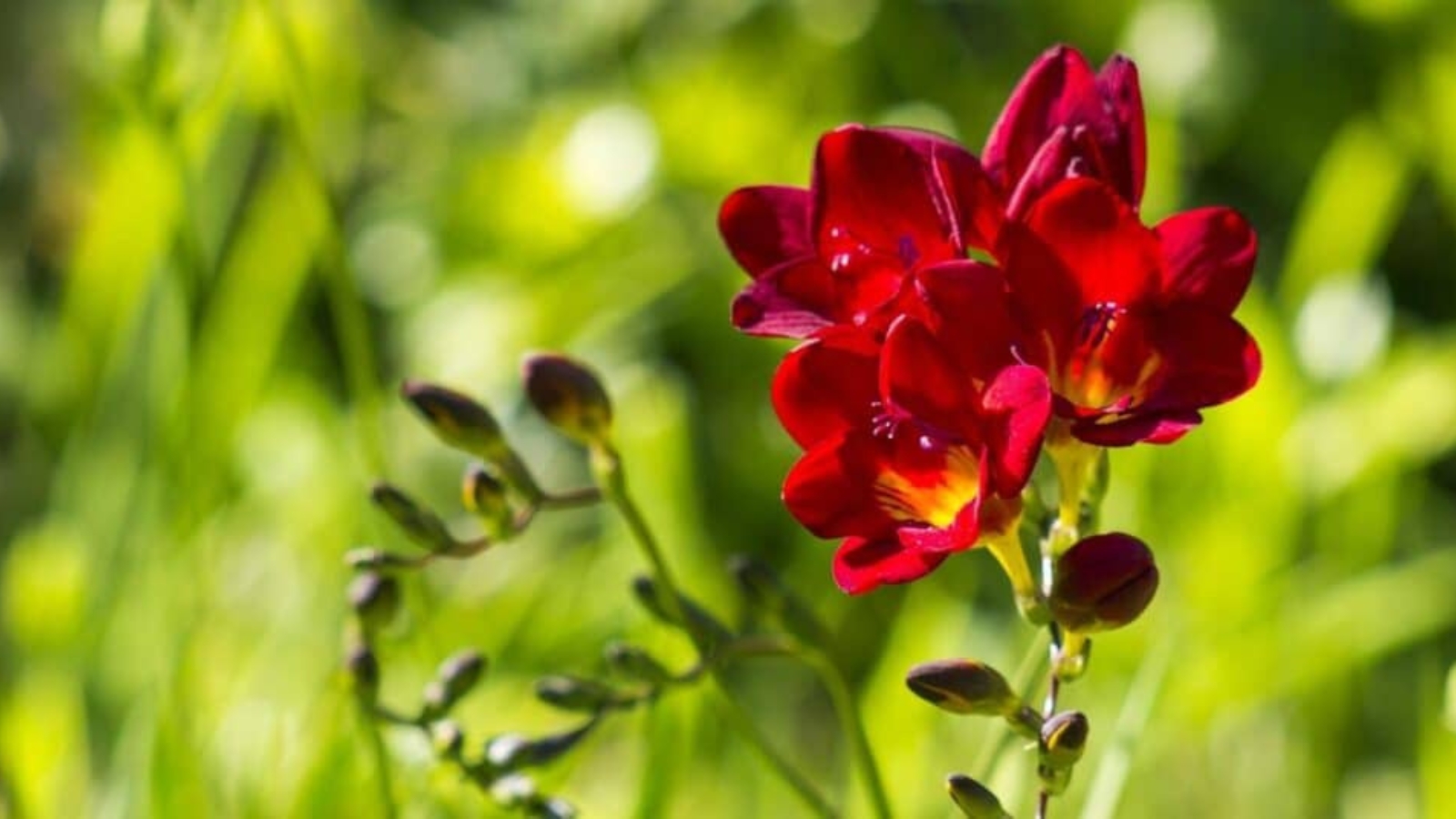
Freesias grow cute and dainty flowers that have yellow-orange centers and bright red petals. Their stems are very thin and delicate and may not be able to support the flowers. So, if you notice Freesias leaning over too much, make sure to provide some support by planting a stake next to them.
Freesias do best in zones 9 to 10. They can grow both indoors and outdoors as long as they have full sunlight and well-draining soil. They can’t handle cold temperatures very well, but they are quite hardy against pests and bugs and can hold their own against them quite well.
Hibiscus

|
|
botanical name Hibiscus |
|---|---|
|
|
sun requirements Full Sun |
|
|
height 3-7 feet |
|
|
hardiness zones 5 to 8 |
The Hibiscus has gorgeous, broad petals with an iconic trumpet-shaped stamen that’s very attractive to butterflies and hummingbirds. This plant is hardy in zones 5 to 11, and it typically blooms in the summer and fall. However, it can bloom year-round in some tropical climates.
Hibiscuses come in a hardy variety and tropical variety and the level of care will depend on the variety. In general, they thrive in bright conditions and grow best in well-draining soil. However, the hardy variety will prefer moist conditions, so they need more frequent watering.
These red perennials truly add an exotic element to a garden, and their ability to attract butterflies and hummingbirds only adds to the buzz and excitement that they can bring.
Marigold

|
|
botanical name Tagetes |
|---|---|
|
|
sun requirements Full sun |
|
|
height 6-12 inches |
|
|
hardiness zones 2 to 11 |
Marigold flowers bestow a lot of cheer with their wavy petals and vibrant red color. They’ve become popular because they’re relatively easy to care for, so many people add them to their gardens.
These low-maintenance plants can thrive in zones 2 to 11. Once you help them get established, they don’t need much follow-up care and eventually become drought-tolerant. They do require full sunlight, and can’t grow very well in shaded areas. The stems become leggy, and they won’t be able to grow their signature robust flowers.
Pentas

|
|
botanical name Pentas lanceolata |
|---|---|
|
|
sun requirements Full sun to partial shade |
|
|
height 18 to 36 inches |
|
|
hardiness zones 10 to 11 |
The Pentas is a shrub that grows clusters of star-shaped flowers. The flowers are the perfect shape for hummingbirds and butterflies to enjoy.
Most Pentases grow in containers, but they can also grow directly on a garden bed. They’re hardy in zones 10 to 11. These plants can take a little longer to grow than other plants, but once they establish themselves, they add a beautiful splash of color to any garden.
Pentases aren’t too picky with their soil, but they do best in well-draining soil. They also enjoy a lot of bright sunlight and grow best when they receive six to eight hours of sun daily.
Scarlet Sage

|
|
botanical name Salvia splendens |
|---|---|
|
|
sun requirements Full sun and some shade |
|
|
height 2-4 feet |
|
|
hardiness zones 10 to 11 |
This perennial grows eye-catching red flowers in long stalks and looks beautiful when planted as an edging plant. They belong in the mint family and emit a scent that many animals, including deer and rabbits, don’t enjoy.
Scarlet Sages are hardy in zones 10 to 11, and once they get established, you don’t have to worry about them too much. Just make sure to plant them in bright areas and well-draining soil.
To unleash the full potential of the Scarlet Sage, gardeners must be on top of deadheading the flowers. This will help them to bloom continuously and abundantly throughout the growing season.
Tulip
|
|
botanical name Tulipa |
|---|---|
|
|
sun requirements Full sun, Partial shade |
|
|
height Height 4-36″ Width 6″ |
|
|
hardiness zones 3 to 7 |
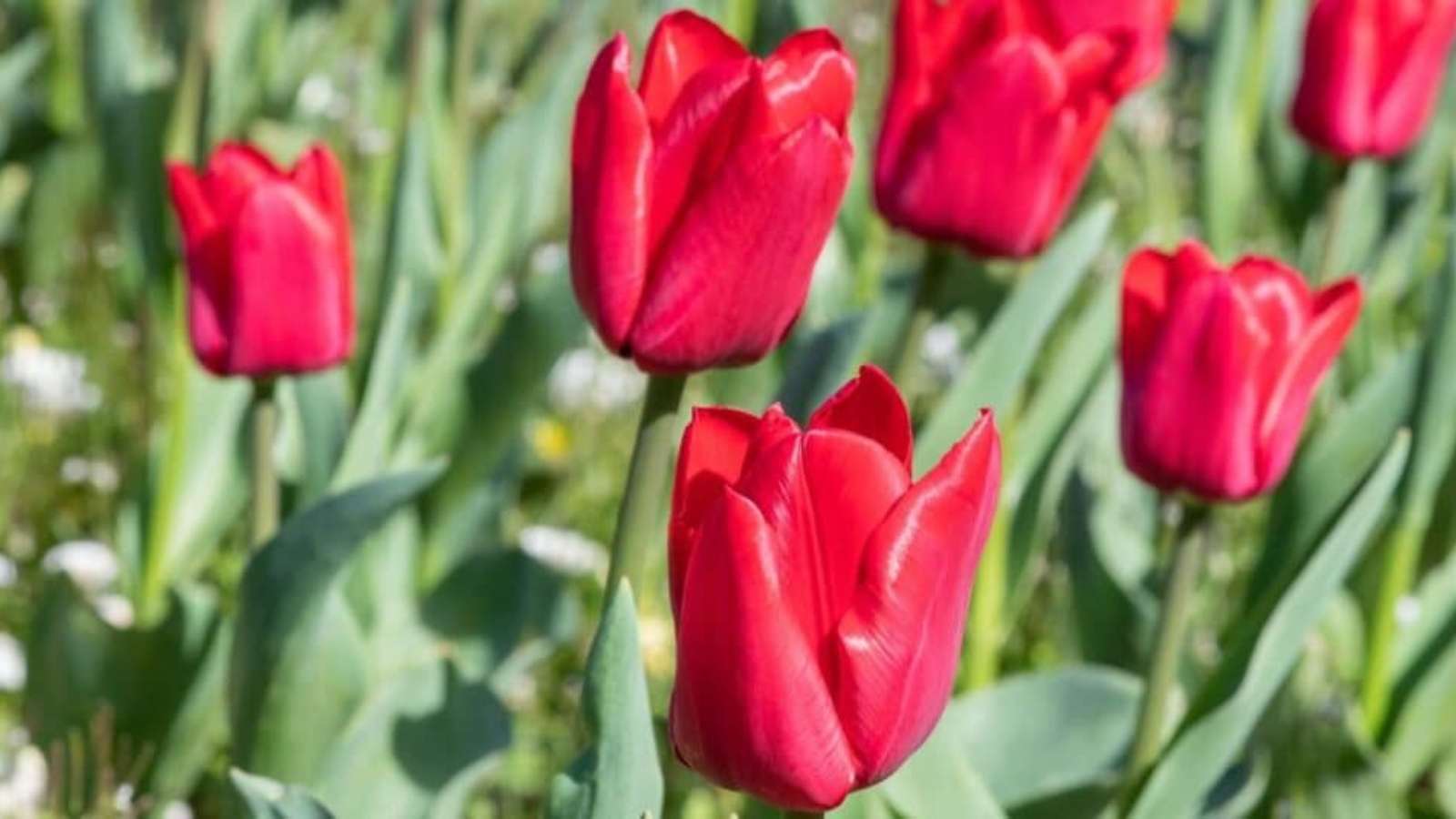
Red tulips are a classic sight to see in any garden. These popular perennials tend to be the first sign of spring as they start to grow around March, and they usher in the feeling of newness and warmer weather.
Tulips thrive in zones 3 to 8 and prefer full sun with well-draining soil. Although they’re technically perennials, many gardeners plant them as annuals. The best time to plant the bulbs is in the fall at about four to eight inches deep into the soil.
It’s essential to snip off the flower stalk once it fades to help the bulb restore some energy and bloom again.
Valerian

|
|
botanical name Centranthrus ruber |
|---|---|
|
|
sun requirements Full to sun to partial shade |
|
|
height 5 feet |
|
|
hardiness zones 5 to 8 |
Although Valerians are commonly white or pink, red varieties do exist. They have tiny flowers that grow in bushy clusters that resemble a fox’s tail. These adorable flowers add a playful touch to landscapes.
Valerians bloom through early summer to fall and thrive in zones 5 to 8. They attract a lot of birds and butterflies, while repelling deer. They prefer areas with full sun and grow best in well-draining soil. However, they can also grow in poor soil and can become quite drought-tolerant.
Windflowers

|
|
botanical name Anemone |
|---|---|
|
|
sun requirements Full sun, Partial shade |
|
|
height 6 inches to 4 feet tall |
|
|
hardiness zones 3 to 10 |
Windflowers got their name because they look beautiful as they sway with light breezes. The flowers tend to have a bright red or red-orange color that attracts butterflies, and the plant can grow in thick bushes when pruned properly. They’re also pest-resistant and don’t tend to catch diseases.
This plant can grow in various areas and climates and do best in zones 3 to 10. They thrive in moist soil and will appreciate occasional fertilizer during the growing season. Depending on when you plant them, the flowers will bloom either in the fall or spring.
Woolflower

|
|
botanical name Celosia trigyna |
|---|---|
|
|
sun requirements Full sun |
|
|
height 1-3 ft. tall, 2-4 ft. wide |
|
|
hardiness zones 9 to 11 |
Woolflowers thrive in sunny and dry locations. You can see them growing at their best in zones 9 to 11. The flowers grow in uniquely shaped cones that often come in bunches of three, and they have a fuzzy appearance like wool.
This plant is extremely successful with re-seeding and can be difficult to contain. Therefore, they make excellent filler plants and are prefect for gardeners that enjoy having a garden with a wild look. Gardeners that prefer more order in their landscaping will do best to avoid these free-spirited perennials.
Yarrow

|
|
botanical name Achillea millefolium |
|---|---|
|
|
sun requirements Full sun |
|
|
height 2-3 feet |
|
|
hardiness zones 3 to 9 |
Yarrows produce the tiniest and most delicate cluster of flowers. They’re extremely hardy and can even become invasive in some gardens. So, it’s essential to be on top of their growth to ensure that they don’t invade other plants’ spaces.
This perennial thrives in zones 3 to 9. They need full sunlight and prefer to grow in well-draining soil, but they can also grow in poor-quality soil. They’re also pest-resistant and deer-resistant, so it doesn’t take much to keep them once they get established.
Wrap Up
Red Perennials can create all kinds of moods in a garden. They can make landscapes feel romantic, robust, or passionate. Red flowers are also often a symbol of love.
So, make sure to spread the love by planting a few red perennials in your garden for the next growing season. They’ll add a dynamic color to your garden, and you can even handpick a few to arrange a beautiful bouquet for all the loved ones in your life.


